
EV Maintenance in Saudi Arabia: What Actually Wears Out (2026 Guide)
What drives EV maintenance over five years in Saudi Arabia: battery checks, brakes, tires, cooling, software. A plain breakdown, without prices, of what to plan for.
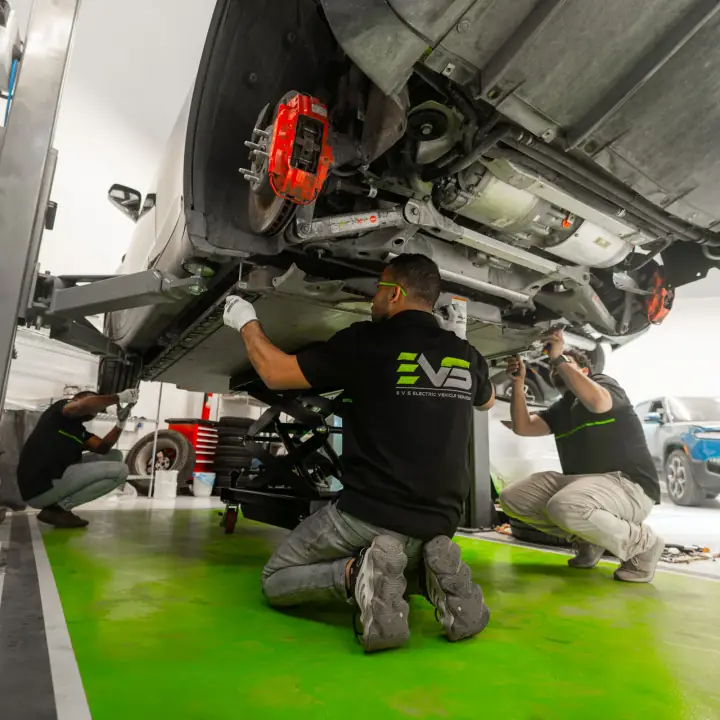
If you're shopping for an EV in Saudi Arabia or just bought one, the maintenance question keeps coming up, usually with two opposite myths attached. Myth one: "EVs need no maintenance, just plug them in." Myth two: "When the battery dies, the car is a write-off." Neither is true. The real picture sits between them, and it depends on the brand, how you drive, and how seriously you take the Saudi summer.
What actually wears on an EV. An EV has far fewer moving parts than a combustion car. In most cases there is no engine oil, no spark plugs, no timing belt, and no transmission service, which removes a lot of work. But three areas still need care: the high-voltage battery (cooling, balancing, health checks), the chassis (brakes, suspension, tires), and the software (updates, recalibration). The Saudi climate puts extra pressure on all three.
Year one is usually light. For the first 12 months or 15,000 km, most EV brands recommend an inspection, a tire rotation, a cabin filter, and a battery health check. At an independent specialist this is a routine annual visit that is quick to schedule. Tesla, BYD, Lucid, Zeekr, NIO, XPENG, and Lixiang all fall in this group when serviced at a properly equipped centre. If you own a Tesla, the Tesla service page lists what we cover.
Years two and three are where costs start to vary. Around 30,000-45,000 km, many EVs are due for brake fluid service (EVs still have hydraulic brakes), AC service before summer (refrigerant top-up and cabin filter), a suspension inspection, and a round of software updates. Owners with air suspension (Lucid Air, Lixiang L9, some Mercedes EQ) have more to do, because air suspension needs inspection from time to time. A leak caught early is much simpler to fix than a full air-strut replacement later.
Years three and four bring the battery into focus. The first deep battery health check usually comes around year three. At this point you want to know the real capacity compared with the original, the cell balance, and how well thermal management is working. A proper battery diagnostic at an independent EV centre gives you a written report covering capacity, any weak modules, and cooling system performance. If something is degrading faster than expected, you want to know now, not after the warranty expires.
Tires are the big recurring cost people overlook. EVs are heavier than equivalent combustion cars because of the battery, and instant torque wears tires faster. Expect to replace tires more often than on a petrol car. A typical EV needs a new set every 35,000-50,000 km, depending on driving style. For premium EVs (Tesla Model Y, Lucid Air, Lixiang L9), the EV-rated tires are also more specialised than standard passenger tires. For most owners this is the biggest recurring item, not the battery.
What the Saudi climate adds. There are three specific effects. First, AC load. Running the AC at 40-45°C in summer draws heavy continuous power, which stresses the inverter and the cabin AC compressor, so annual AC service matters more here than in cooler markets. Second, battery thermal cycling. Saudi summers make the battery cooling system work harder, and any weak spot (a coolant leak, a worn pump, a blocked radiator) shows up sooner. Third, dust and sand clog cabin filters and battery cooling radiators faster. None of these is serious on its own, but together they shorten the maintenance intervals compared with what the global manual suggests.
When the warranty runs out. The biggest change comes when the factory warranty ends, usually in year four or five. Until then, the dealer covers the battery and drivetrain. After that, owners have two choices: pay the dealer's labour rate for any future major issue, or buy extended warranty coverage from an independent centre. For Tesla, BYD, and other brands with established dealer networks, the gap between dealer rates and extended-warranty plans is significant. For Chinese imports brought in through parallel-import channels, extended warranty is effectively the only option, because the dealer warranty was never valid here in the first place.
What doesn't appear in dealer quotes. Owners often miss two things when they plan. First, software diagnostic time. When a fault code appears, a proper diagnostic pass at an EV centre is a separate line item from any repair. This is normal and not a hidden charge. It pays for the time to read the vehicle's high-voltage system properly instead of guessing from a generic OBD-II scan. Second, body and paint work on EVs is more involved than on combustion cars, with specialised paint matching, care around the battery pack structure, and ADAS recalibration after collision repair. Given Saudi road conditions, plan for at least one minor bodywork job in five years.
The five-year picture. Over five years, an EV in Saudi Arabia costs significantly less to run than an equivalent petrol car once you add up maintenance, fuel or electricity, and tires. Most of the savings come from dropping engine oil, transmission service, and petrol entirely. The maintenance that remains is real but predictable. It is heavier in years four and five, when the battery health check, extended warranty enrolment, and bigger items like air suspension service tend to come at the same time.
How to plan. The simplest rule is to set aside a modest monthly amount during the first three years to cover the annual service, AC service, and one set of replacement tires. After year three, raise the monthly amount, because extended warranty and the bigger inspection items start. Even then the total is noticeably lower than owning an equivalent petrol car, before you count any fuel savings.
At EVS we serve 21+ EV brands, including Tesla, BYD, Lucid, Porsche, Mercedes, Audi, Rivian, Hyundai, Kia, Zeekr, XPENG, NIO, Lixiang, MG, Rox and more. We give written quotes before any work, share the diagnostic data with you, and keep a digital service record for every vehicle. If you want to talk through what your car is likely to need next, contact us on WhatsApp, phone, or the form, or book an inspection slot directly. To learn how the EV aftermarket works in Saudi Arabia, see our companion guide to the EV aftermarket.
Tap into EVS expertise
Book a free check now — a certified technician will answer every question.

Related articles
What Affects EV Maintenance Costs in Saudi Arabia
Why do EV maintenance costs vary so much between owners? Knowing what drives the cost helps you budget realistically and avoid surprises.
EV Air Conditioning in Saudi Heat: Maintenance Tips That Save Range
Your EV's AC works hard in Saudi Arabia. Learn how to maintain it and reduce its effect on your driving range.
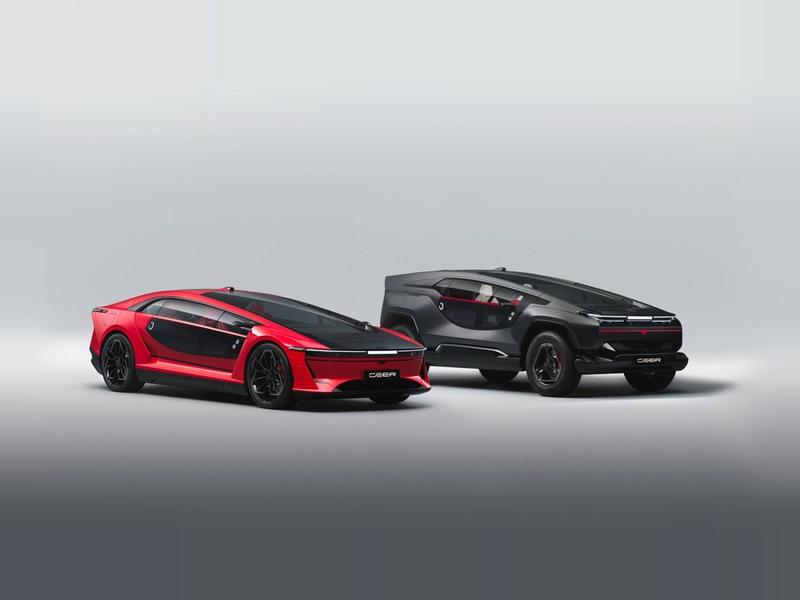
Ceer price, warranty and arrival date in Saudi Arabia
The Ceer Exobot costs SAR 399,000 with a 6-year warranty and free servicing. See its specs, its 2027 arrival date and what it means for EV owners.