
Tesla vs BYD in Saudi Arabia: Honest Buyer's Comparison (2026)
Tesla or BYD for Saudi Arabia? A comparison of range, charging, service, warranty, and total cost of ownership for the two most popular EV brands in the Kingdom.
Tesla and BYD are the two EV brands Saudi buyers compare most. They come from very different places. Tesla is the well-known American brand, and BYD is the global volume leader from China. Choosing between them is rarely as simple as one model against another. This guide covers the questions that matter for a Saudi buyer in 2026.
Start with the use case, not the brand. The first question is what you'll do with the car. A Riyadh commuter who drives 60-100 km a day, charges at home, and sometimes drives to Jeddah or Dammam needs something different from a family in a compound that needs a 7-seater for school runs. Both brands have models for both jobs, but their strongest models are different. Tesla's strength is the Model Y and Model 3 for daily driving, with the global Supercharger network as backup. BYD's strength is its wide range of body styles (sedan, SUV, hatchback, plug-in hybrid, range-extender), which covers uses Tesla doesn't.
Range and charging. On paper, both brands publish similar real-world ranges for vehicles in the same class: roughly 380-500 km depending on model and battery option. In practice, summer AC load in Saudi Arabia cuts real range by 15-25% for both. The difference is in charging. Tesla owners get Supercharger access. It is the most consistent fast-charging network worldwide, and it is spreading along major routes in Saudi Arabia. BYD owners use the CCS standard, which works on every public DC fast charger in the Kingdom (EVIQ and the public network expanding under Vision 2030) but isn't tied to one ecosystem. For home charging, both work with standard Type 2 chargers, with no brand-specific limits.
Build quality and reliability. Both brands have improved a lot. Early Tesla quality issues (panel gaps, paint defects on imported units) have mostly been fixed on newer model years. BYD's build quality has risen sharply since 2022, and the Han, Seal, and Atto models that arrive in Saudi Arabia now feel solid. The reliability differences show up in software updates and parts availability. Tesla pushes over-the-air updates more often, while BYD relies more on workshop visits for major firmware changes. We handle vehicle programming and updates for both brands.
Service and support. This is where the two differ most in Saudi Arabia. Tesla has limited official service infrastructure in the Kingdom, because the brand doesn't work like a traditional dealer network. BYD has dealers in place, but coverage varies by city. Owners of both brands often go to independent specialists for anything from a battery check to a body repair. At EVS we cover the full scope for both: battery service, body and paint, mechanical, and extended warranty plans that start after factory coverage expires.
Warranty in Saudi Arabia. Read this section carefully, because it changes the maths. Tesla vehicles imported through official channels carry the standard manufacturer warranty (battery and drivetrain usually eight years or 192,000 km). BYD warranties vary widely depending on the import route. Cars bought from authorised dealers in the Kingdom carry the brand warranty. Cars brought in through parallel imports often have no locally valid warranty at all, whatever the original sticker said. Before you sign, ask: "Is the warranty valid in Saudi Arabia?" It is the most important question, and the answer needs to be a written document, not a verbal promise.
Total cost of ownership over five years. Take a Tesla Model Y Long Range and a BYD Han EV, each driven 18,000 km a year in Riyadh. The purchase price differs, and Tesla is usually higher in absolute terms. The five-year operating cost (electricity, tires, service, insurance) is roughly the same for both, and both come in 40-50% below an equivalent petrol SUV. The bigger factors for the buyer are how the car is financed and whether the warranty is actually honoured. For the year-by-year breakdown, see our detailed look at maintenance cost across EV brands in Saudi Arabia.
What people don't ask but should. Ask any dealer or seller three questions. First, what happens after the factory warranty expires? Is there a local service provider, or are you on your own? Second, can the car's software be updated locally, or does it need to connect to servers that can't always be reached from Saudi Arabia? Some Chinese brands have this problem. Third, how well is the car adapted for Saudi Arabia: Arabic interface, prayer times, kilometre units, local maps? Tesla is strong on the first and third, and mixed on the second. BYD varies by model and import route.
Resale value. EV resale values in Saudi Arabia are still settling. Tesla's brand recognition gives it a slight edge in the used market, but premium BYD models hold their value reasonably well, especially the Han and Seal. Both lose value faster than equivalent petrol cars in the first three years, then level off. Depreciation slows a lot if you can show a documented service history, which is another reason to use an independent service centre that keeps proper records.
The verdict. No brand wins for everyone. Tesla, especially the Model Y, is hard to beat if you want tightly integrated software and charging, plan long drives on Supercharger routes, and care about an established brand for resale. BYD has more options that fit if you want a wider choice of body styles (sedan, SUV, hatchback, plug-in hybrid), drive mostly in the city, and want a lower purchase price for similar real-world performance. Owners of either brand gain a lot from working with a specialist independent service centre once the warranty period ends.
At EVS, we service both Tesla and BYD, plus 19 other EV brands, from our Riyadh facility. We give written diagnostic reports, transparent pricing, and a service history that stays with the car. If you're deciding between Tesla and BYD for a specific use, contact us on WhatsApp, phone, or the form and we'll go through your options with no brand bias. If you're shopping in the used market, book a pre-purchase inspection to get a written assessment before you sign.
Tap into EVS expertise
Book a free check now — a certified technician will answer every question.

Related articles
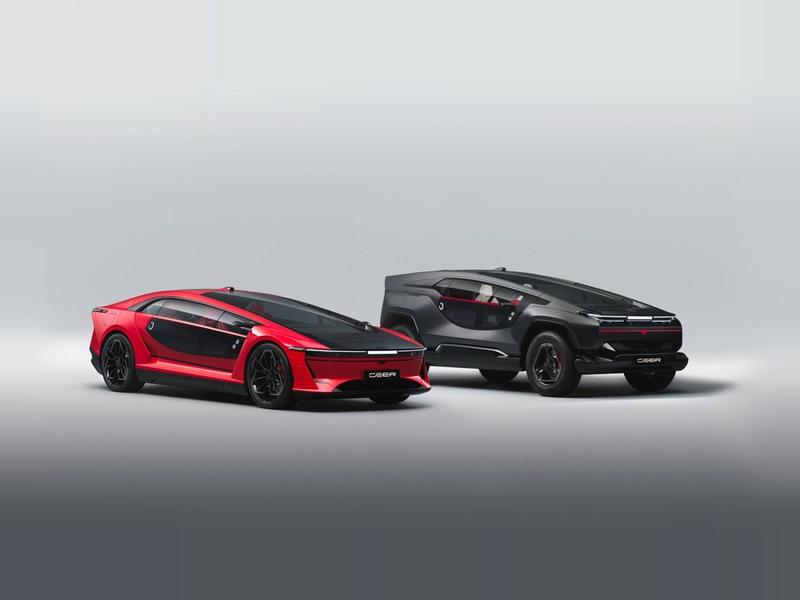
Ceer price, warranty and arrival date in Saudi Arabia
The Ceer Exobot costs SAR 399,000 with a 6-year warranty and free servicing. See its specs, its 2027 arrival date and what it means for EV owners.
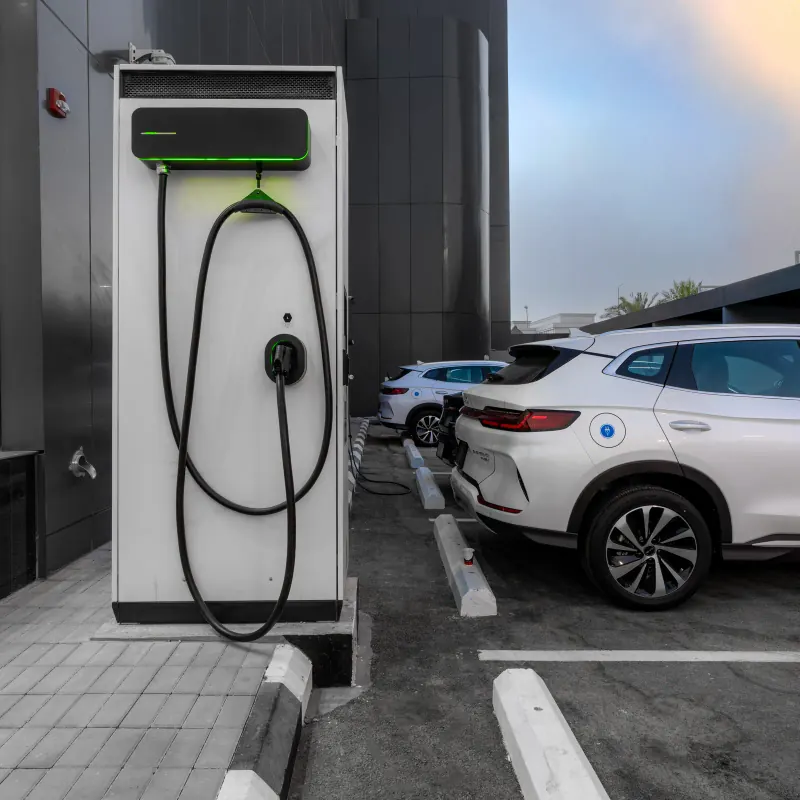
How to Choose the Best EV Workshop in Riyadh: A Buyer's Checklist
Not every workshop can service an electric vehicle properly. Here are the questions to ask and the red flags to watch for before you hand over your keys.
EV not charging? What to record before a diagnostic visit
Record your EV's charging error, vehicle details and recent charging history before contacting a workshop. A practical checklist for Riyadh owners.