
EV Parts Explained: What's Inside Your Electric Vehicle and How to Care for It
EVs share many parts with regular cars, but some are completely different. An overview of the main components in your EV and what each one needs in Saudi Arabia.
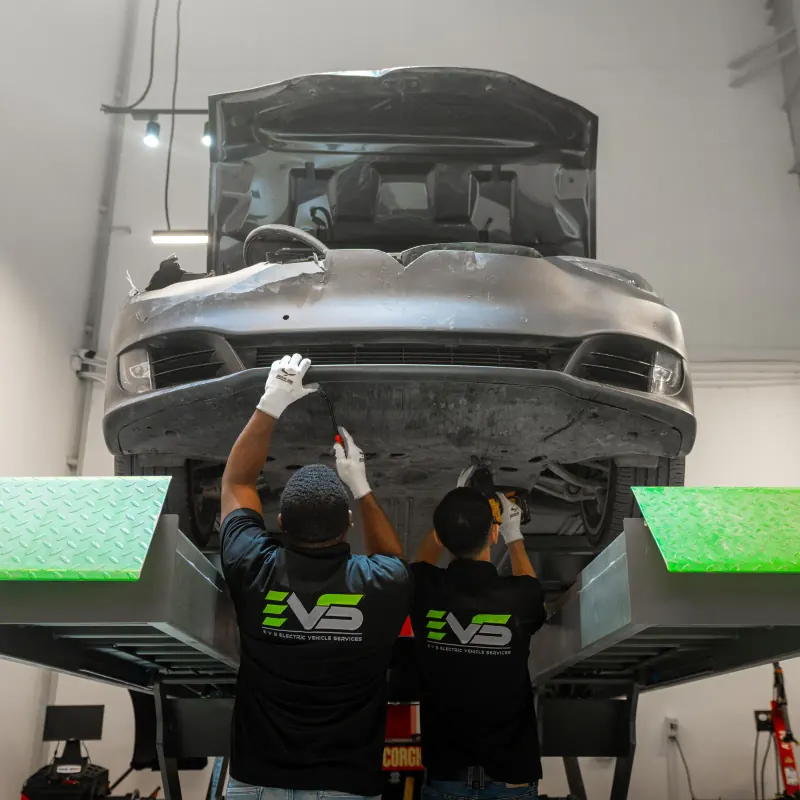
Knowing what's inside your EV helps you look after it and make better decisions when something needs attention. EVs share many parts with traditional cars, but the powertrain and several supporting systems are completely different. Here is an overview of the main components and what each one needs in Saudi Arabia.
The high-voltage battery pack. This is the largest, heaviest, and most expensive part of your EV, and it usually sits under the floor of the car. It stores the energy that drives the motors. Modern EV batteries are designed to last hundreds of thousands of kilometers when treated well. They need an annual health check and careful charging habits: avoid sitting at 100% in heat, and avoid running near 0%. Their thermal management system also has to work harder in Saudi summer than in cooler climates. When a problem develops, it is often a single bad module rather than the entire pack, and a specialized workshop can find and replace just that module.
The electric motor (or motors). Single-motor EVs have one electric motor driving either the front or rear wheels. Dual-motor EVs have two, for all-wheel drive. Electric motors are very reliable. They have far fewer moving parts than a combustion engine, and there is no oil to change, no spark plugs, and no belts. Most EV motors will outlast the rest of the car. Failures are rare and usually come from external damage, not wear.
Power electronics: the inverter, DC-DC converter, and onboard charger. These parts convert energy between the high-voltage battery, the motor, and external chargers. They are solid-state electronics with no moving parts, but heat damages them. Saudi summer puts extra load on the cooling systems for these parts, which is one reason good thermal management matters.
Thermal management system. Coolant flows through channels in the battery, motors, and power electronics to keep them in their ideal operating range. EVs use a specialized coolant, so never put standard engine coolant in an EV. The cooling system needs periodic inspection, and any leak or pump problem should be fixed immediately to avoid damage to the high-voltage components.
Brakes, regenerative and physical. Regenerative braking uses the motor to slow the car and sends recovered energy back to the battery, so the physical brake pads do far less work than in a petrol car. On a well-driven EV, brake pads often last more than twice as long as on a comparable petrol vehicle. Brake fluid still needs testing on the manufacturer's recommended schedule, and the physical brakes still need inspection.
Tires. EV-specific tires are designed for heavier vehicles, instant torque, and lower rolling resistance to get more range. Fitting non-EV tires to save money doesn't pay off, because range drops noticeably and the tires wear faster. EV tires usually cost more than regular tires but last reasonably well if you rotate them regularly. Skip the rotation and they wear unevenly and need replacing much sooner.
Cabin filter. The filter that cleans the air entering your cabin clogs much faster in Saudi Arabia than in most countries because of desert dust, sand, and city pollution. A clogged filter makes the AC work harder, which directly reduces your range. Replacing it is one of the cheapest services you can do, and it makes a real difference to comfort and efficiency.
The 12V auxiliary battery. Most EV owners are surprised to learn their car still has a small 12V battery. It powers the onboard computer, lights, and other low-voltage systems. These batteries fail faster in Saudi heat than in cooler climates, and a dead 12V battery can stop your EV from starting even when the high-voltage battery is full. Replacing it every few years is normal.
Infotainment and software. A modern EV is largely a computer on wheels. Screens, voice assistants, navigation, and connectivity all run on software that needs updates from time to time. Some updates arrive over the air. Others need a workshop visit, especially on imported vehicles, where over-the-air updates may not work reliably from Saudi Arabia.
Suspension, steering, lighting, glass, and body panels are similar to those on regular cars and follow standard maintenance practice. The main difference is weight. EVs are heavier, so suspension components carry more load and may need attention sooner than on a comparable petrol car.
What about imported EVs? Many EVs in Saudi Arabia were parallel-imported from other markets. Parts for these cars can take longer to source and may have to come from overseas, so plan for that when something needs replacing. A workshop with established suppliers across many brands will get you back on the road faster than a general garage.
At EVS, we service 21+ EV brands and source genuine parts through established channels. We'll diagnose your car, explain exactly what it needs, and give you a written quote before any work begins. Contact us via WhatsApp, phone, or our online form to book an inspection or ask about a specific part for your vehicle. Our mechanical services page has the full picture.
Tap into EVS expertise
Book a free check now — a certified technician will answer every question.

Related articles
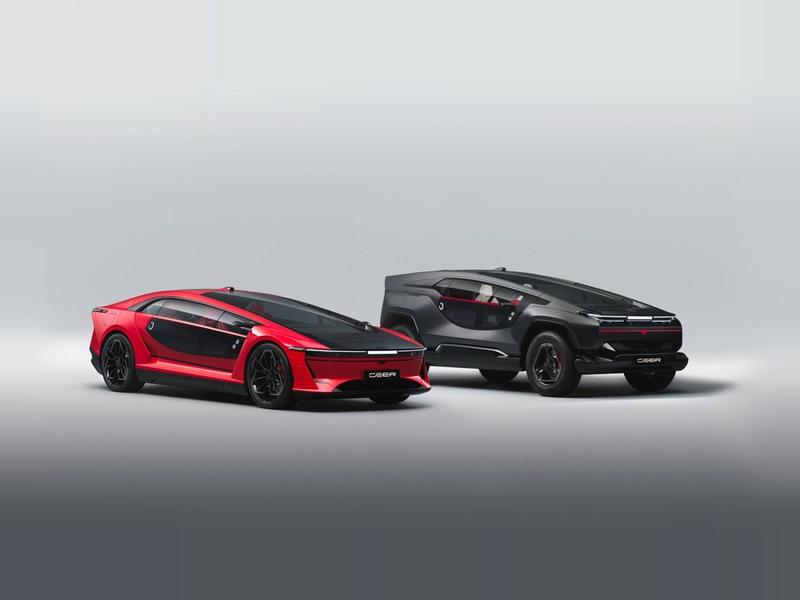
Ceer price, warranty and arrival date in Saudi Arabia
The Ceer Exobot costs SAR 399,000 with a 6-year warranty and free servicing. See its specs, its 2027 arrival date and what it means for EV owners.
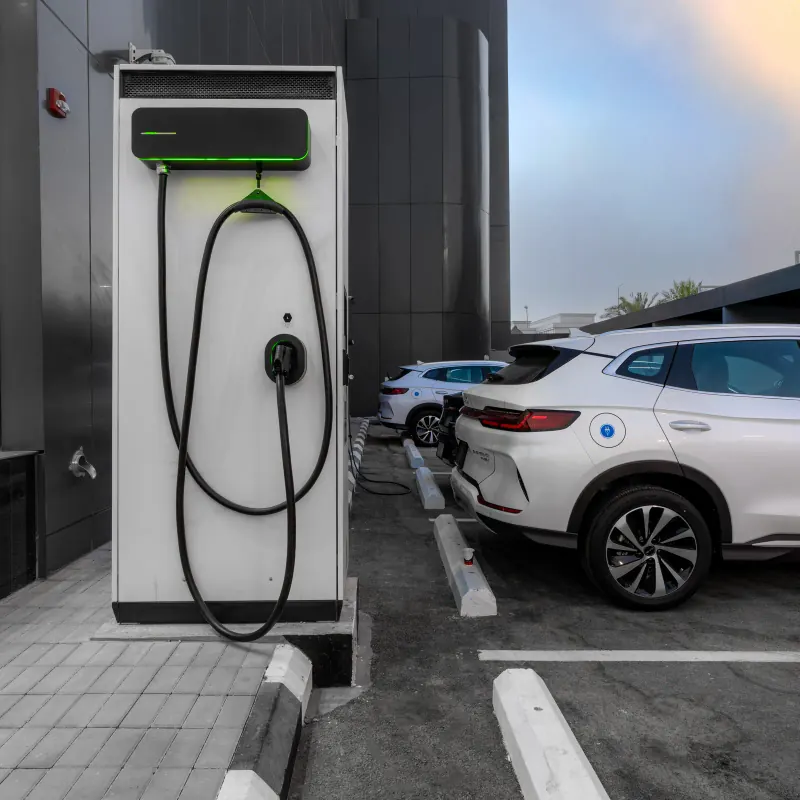
EV not charging? What to record before a diagnostic visit
Record your EV's charging error, vehicle details and recent charging history before contacting a workshop. A practical checklist for Riyadh owners.
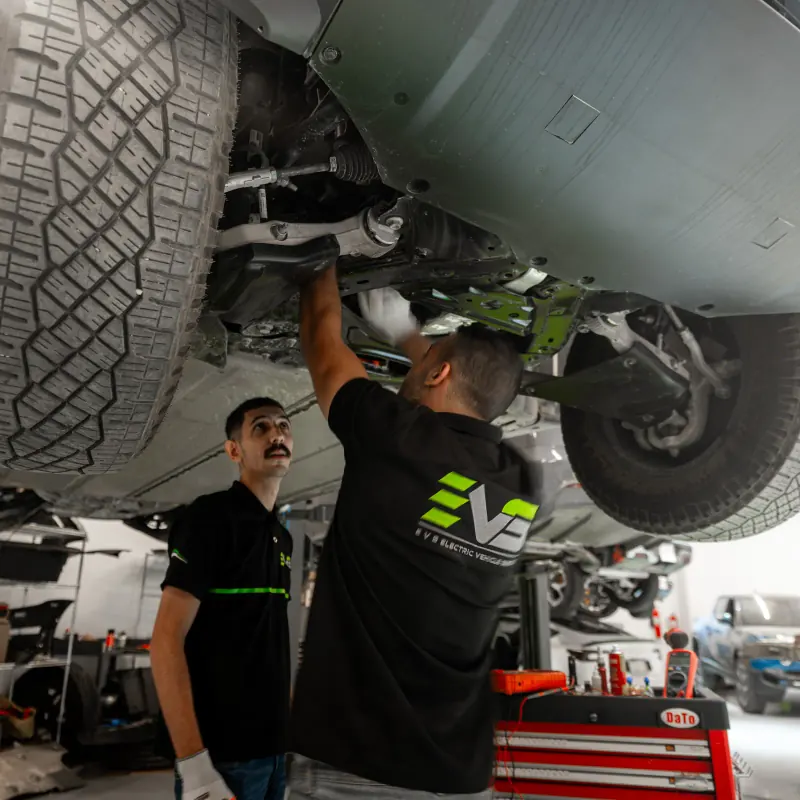
Smart #1 & #3 Maintenance in Saudi Arabia — EV Service, Warranty & Parts (2026)
Smart #1 and #3 maintenance in Saudi Arabia: battery care in the heat, tire wear, the brake service owners skip, warranty by purchase route, and service at EVS Riyadh.