
EV Dashboard Warning Lights Explained: What Each One Really Means
EV dashboard warnings can be confusing, and ignoring the wrong one is expensive. What the common warnings mean and which ones need immediate attention.
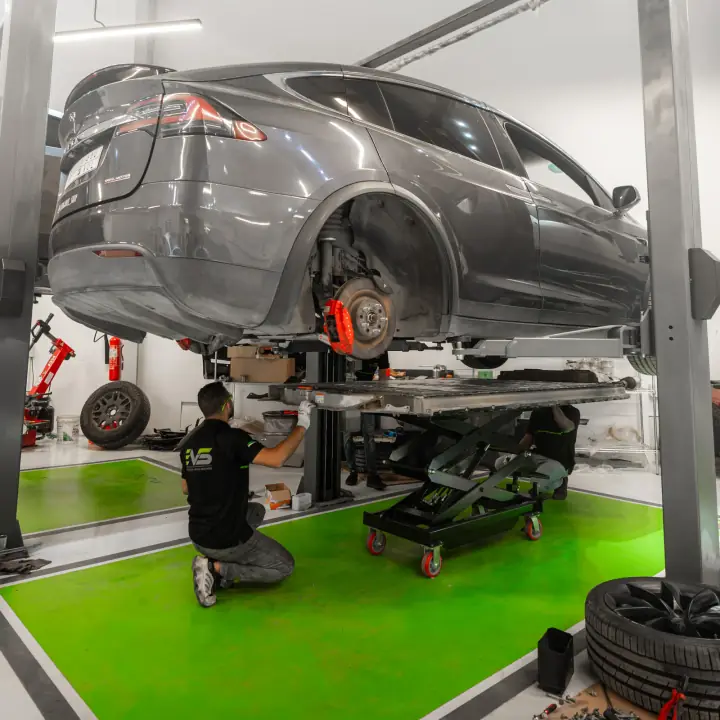
Modern EVs have dozens of warning lights and dashboard messages, far more than a traditional petrol car. Some are routine reminders. Others mean you should stop driving immediately. Knowing the difference can save you thousands of riyals and prevent serious damage. This guide explains the most common EV dashboard warnings, what they mean, and what to do when each one appears.
Warning colors are only a guide. Read the exact message and follow the owner's manual for your model. An amber light does not automatically mean it is safe to keep driving. Follow any instruction to stop safely or not drive.
Battery-related warnings. This is the most important category and the one with the most variety. "Reduced Power" or "Power Limited" means the battery management system has detected a fault and is limiting power to protect the system. Common causes are overheating, cell imbalance, or a failing module. "Battery System Service Required" or similar wording usually means a more serious issue. Book a diagnostic immediately and avoid long trips. "Low Battery" warnings that tell you to charge now are routine, but don't ignore them, because running an EV battery down to zero can damage it. "12V Battery Low" is a separate warning about the small auxiliary battery. If you ignore it, you can be stranded even with a full main battery.
Charging system warnings. Read the vehicle alert and the charging equipment's manual before trying another charger or restarting charging. Retry only if the manufacturer permits it and there is no damage, overheating, smoke, unusual smell or other hazard. Do not use damaged equipment or attempt to open or repair it yourself; seek qualified help. Tesla's Wall Connector safety instructions are a product-specific example, not electrical installation guidance for Saudi Arabia.
Motor and drivetrain warnings. "Drive System Service Required" or "Reduced Drive Power" point to problems with the motor, inverter, or drivetrain components. These warnings often mean limp mode is active. Stop and read the message carefully. Some allow you to keep driving safely at reduced speed, and others require you to stop immediately.
Thermal management warnings. "Cooling System Fault" or "High Battery Temperature" warnings matter most in Saudi summer. They usually point to coolant leaks, pump failure, or radiator problems. Driving with an active thermal warning in 45°C+ weather can permanently damage the battery, so don't ignore it. Pull over, let the car cool, and call for service.
Tire and pressure warnings. Stop somewhere safe and check the tires as soon as possible when a pressure warning appears. Check cold pressures against the vehicle's tire-pressure label. Do not dismiss a warning as a false alarm caused by Saudi heat or release air from hot tires to match cold-pressure values. See Tesla's tire-care guidance for a model-specific example.
Brake warnings. "Brake System Service" or a red brake warning needs immediate attention. EVs rely heavily on regenerative braking, so the physical brakes do less work. When they are needed, though, they have to work perfectly. "Regen Braking Limited" usually means the battery is full, so regen has nowhere to send the energy. It is not a fault.
Airbag and safety warnings. Any red airbag light or seatbelt system warning needs prompt service. While these warnings are active, the safety systems may not deploy correctly in an accident.
Software-related messages. You can usually dismiss "Update Available" prompts until you have time. "Update Failed" or "Software Error" messages may need a professional. For imported EVs that don't receive over-the-air updates, the fix is a manual update at a specialized workshop.
Brand-specific warning quirks. Tesla shows very detailed warnings with specific error codes. BYD warnings tend to be more general, and a single warning may have several root causes. LiXiang and Zeekr displays on imported vehicles sometimes show warnings in Chinese, and a specialized workshop can switch these to English or Arabic. Mercedes EQ models follow the standard Mercedes warning conventions, which are very precise but sometimes hard to decode. Avatr, NIO, and XPeng each have their own warning systems. Most are intuitive, but reading the specific fault codes needs brand-specific diagnostic tools.
What to do when a warning appears. Stop somewhere safe before reading or photographing the full message. Follow the alert's instructions and your model's manual. Restart only when the manufacturer's instructions allow it, with the vehicle safely parked; a restart does not prove a fault is repaired. See Tesla's power-cycling instructions for a model-specific example. Keep a record and seek service for persistent warnings.
When to drive vs when to stop. Stop safely and seek roadside assistance if the display says to stop or not drive, or if braking, steering or power is affected, or there is smoke, an unusual smell or overheating. If you are unsure whether driving is safe, do not continue; seek roadside assistance. Do not assume a low 12V battery or amber charging warning permits continued driving. Low-voltage alerts can indicate a risk of shutdown; the exact message determines the action. Tesla's alert guide gives model-specific instructions. For sudden power loss, see what to do if your EV loses power while driving.
FAQ:
Can I clear a warning by ignoring it? Some warnings clear themselves when conditions return to normal, like temperature warnings that disappear when the battery cools. Others stay because the underlying issue is still there. Never assume a warning that keeps coming back is harmless.
Will warnings affect my warranty? Driving with active red warnings can void warranty coverage for any damage that results. Record the warnings and deal with them quickly to protect your coverage.
Why does my EV show different warnings than my friend's same-brand EV? Software updates, model year, regional firmware versions, and import status all change which warnings a specific vehicle shows.
If you have a dashboard warning that keeps appearing and you can't identify it, contact EVS via WhatsApp, phone, or our online form. Our team has diagnostic tools for 21+ EV brands. We can read the warning, find the root cause, and recommend the right service across Riyadh and the Central Region.
Tap into EVS expertise
Book a free check now — a certified technician will answer every question.

Related articles
EV not charging? What to record before a diagnostic visit
Record your EV's charging error, vehicle details and recent charging history before contacting a workshop. A practical checklist for Riyadh owners.
Ceer price, warranty and arrival date in Saudi Arabia
The Ceer Exobot costs SAR 399,000 with a 6-year warranty and free servicing. See its specs, its 2027 arrival date and what it means for EV owners.
Smart #1 & #3 Maintenance in Saudi Arabia — EV Service, Warranty & Parts (2026)
Smart #1 and #3 maintenance in Saudi Arabia: battery care in the heat, tire wear, the brake service owners skip, warranty by purchase route, and service at EVS Riyadh.