
EV Aftermarket in Saudi Arabia: How Independent Service Centers Fill the Gap (2026)
Who services your EV after the dealer warranty ends? How the Saudi EV aftermarket works in 2026 and what to look for in an independent service center.
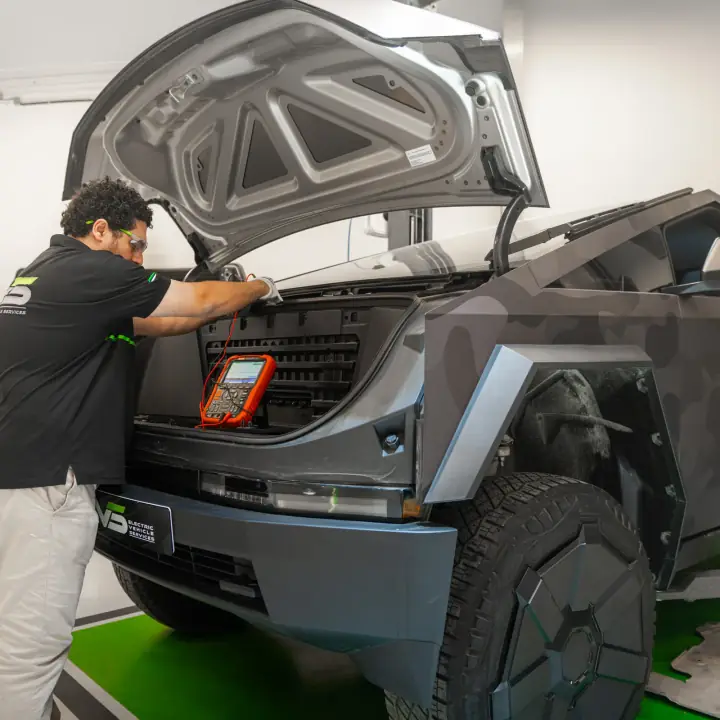
Saudi Arabia's EV market is changing fast. Hundreds of new EVs are registered every month, and factory warranties are starting to expire on the earliest Tesla, BYD, and Lucid imports. Sooner or later every owner asks the same question: who services the car once the dealer no longer has to? The EV aftermarket exists to fill that gap.
What "aftermarket" actually means. The aftermarket is everything that happens to a vehicle after it leaves the dealer's responsibility: independent workshops, parts supply, body shops, and extended warranty plans. For combustion cars this market is decades old. For EVs in Saudi Arabia it is much newer. Most independent workshops are not equipped to safely diagnose a high-voltage battery pack, calibrate a regenerative braking system, or run an authorised software update. As a result, a small number of specialised centres serve a fast-growing fleet.
Why the EV aftermarket matters in Saudi Arabia specifically. Three things are pushing demand harder here than in most markets. First, Vision 2030 is speeding up EV adoption. Public charging is expanding, and new EV models are launching faster than dealer service capacity can grow. Second, the first wave of imports (2018-2021) is now coming out of its standard warranty period. Owners want extended warranty, battery health checks, and a service relationship that continues after the dealer's role ends. Third, the summer climate puts heavy stress on EV batteries and cooling systems, so service intervals and inspections matter more here than in cooler markets. Taken together, a Saudi EV owner who plans to keep a car beyond five years almost certainly needs an aftermarket service provider.
What an independent EV centre actually provides. A real EV-specialised service centre covers the same scope as a dealer's after-sales department, with more focus on EV-specific work. That includes high-voltage battery diagnostics, conditioning, and module replacement, using equipment that reads pack-level data and not only dashboard fault codes. It includes software updates, recalibration, and vehicle programming for systems like regenerative braking, ADAS, and infotainment. It covers mechanical work on the suspension, brakes, cooling, and drivetrain components specific to EVs, and body and paint work that respects the structural design of EVs. It also offers extended warranty plans that start when the factory term ends. A serious EV centre does not guess, does not treat a generic OBD-II scan as the whole diagnosis, and never lets a technician without EV training work on high-voltage components.
Charger installation as part of the picture. EV ownership rarely stops at the car. A home or office charger is part of daily use, and installing one has its own specialised supply chain: site survey, electrical assessment, SEC certification, and brand-specific equipment. The work sits between automotive service and electrical contracting, which is why most EV aftermarket centres partner with a dedicated installer instead of doing it in-house. If you want one provider to handle both the car and the charger, choose a centre that works directly with an installer.
How to evaluate an EV aftermarket centre. The hardest part for an owner is judging quality before the work begins. Look for these signs: technician training and certifications for high-voltage work, not only general automotive credentials; diagnostic equipment that can communicate with the vehicle's battery management system at module level; a real workshop with proper EV lifting, an isolated high-voltage work area, and fire-safety provisions for battery work; a documented service history for each vehicle that the owner can access; and transparent pricing with written quotes, not verbal estimates that keep rising. For a longer checklist, see How to Choose the Best EV Workshop in Riyadh.
Where EVS fits in. EVS opened as Riyadh's first aftermarket centre dedicated only to EVs, plug-in hybrids, and range-extender vehicles. We built the workshop around EV requirements from the start, with high-voltage isolation, battery diagnostic capacity, and programming workstations for the brands sold in the Kingdom, instead of converting an existing combustion workshop. We service 21+ EV brands, run extended warranty plans, and operate from Riyadh with mobile service for selected work. Our sister company Climatech handles charger installation.
If you want to talk through a specific car or service, contact us on WhatsApp, phone, or the form, or book an inspection slot directly.
Tap into EVS expertise
Book a free check now — a certified technician will answer every question.

Related articles
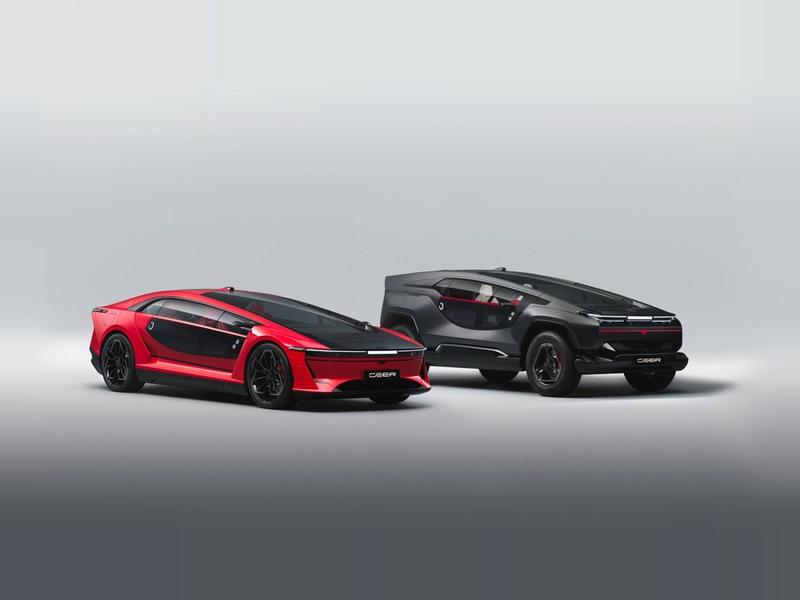
Ceer price, warranty and arrival date in Saudi Arabia
The Ceer Exobot costs SAR 399,000 with a 6-year warranty and free servicing. See its specs, its 2027 arrival date and what it means for EV owners.
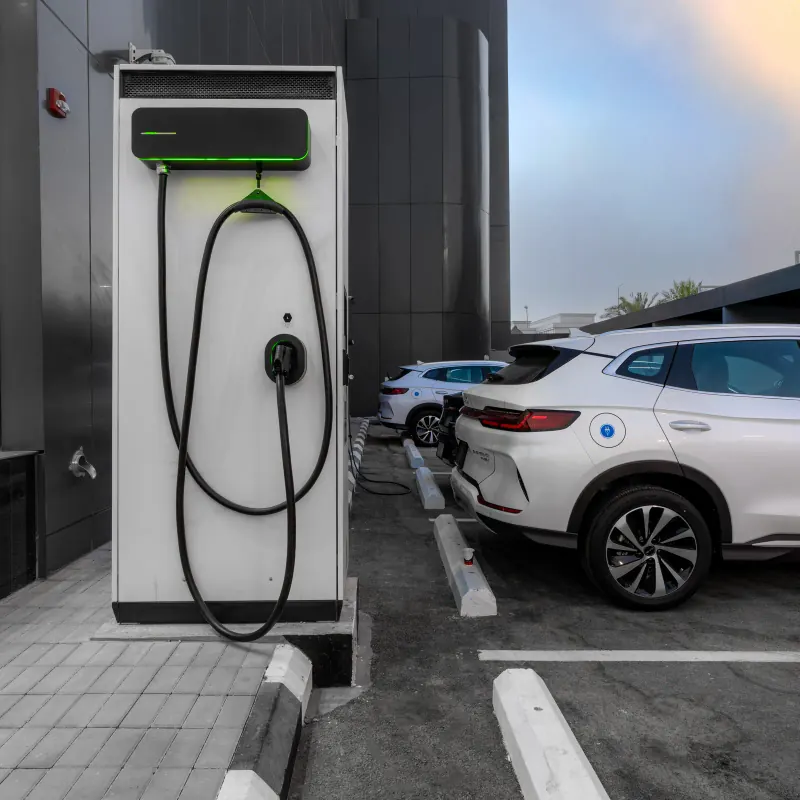
EV not charging? What to record before a diagnostic visit
Record your EV's charging error, vehicle details and recent charging history before contacting a workshop. A practical checklist for Riyadh owners.
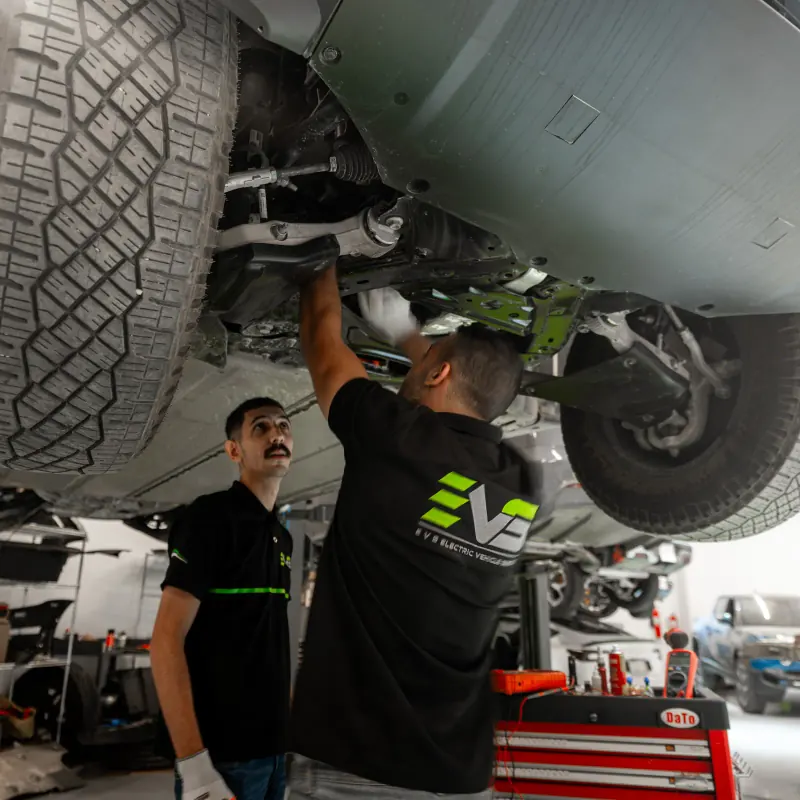
Smart #1 & #3 Maintenance in Saudi Arabia — EV Service, Warranty & Parts (2026)
Smart #1 and #3 maintenance in Saudi Arabia: battery care in the heat, tire wear, the brake service owners skip, warranty by purchase route, and service at EVS Riyadh.